




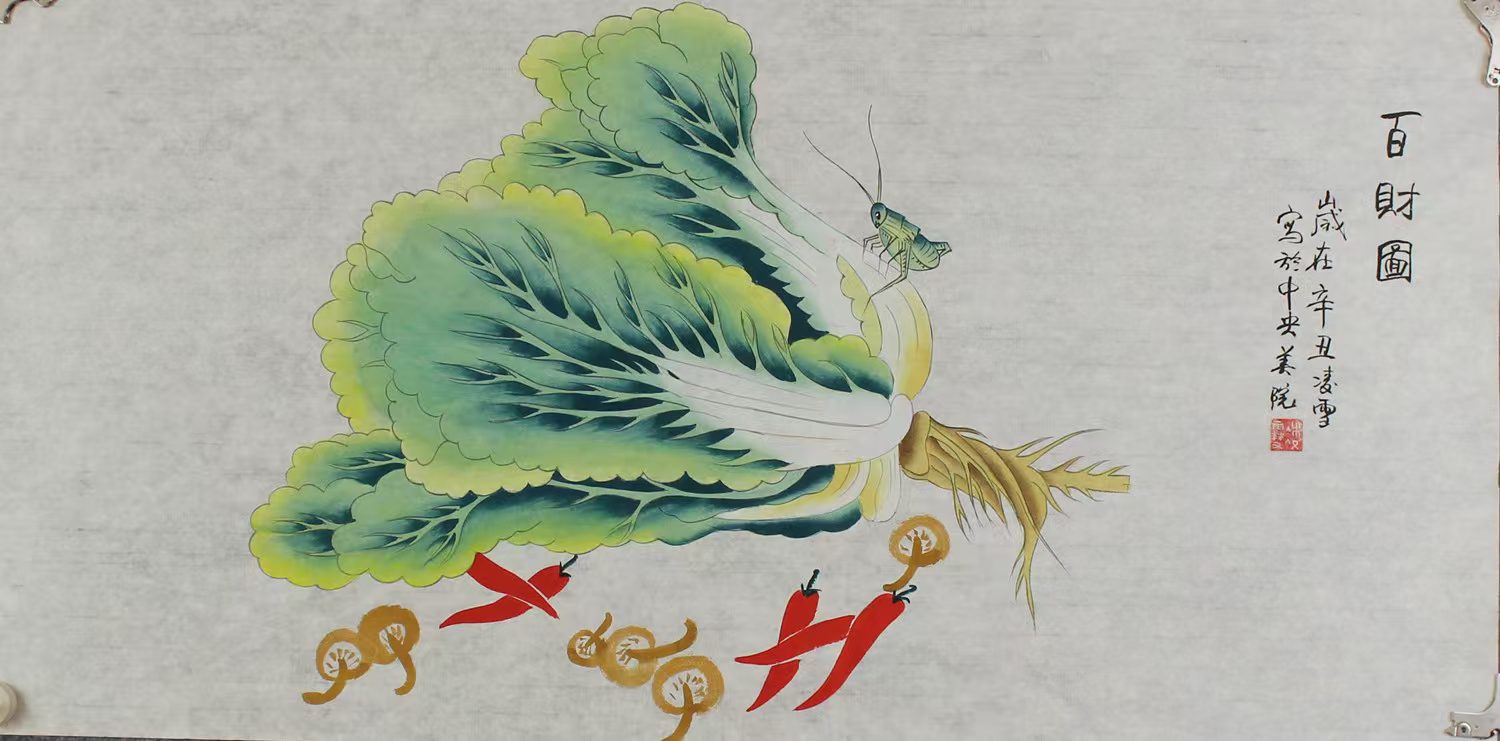
Brush Painting "Hundred Fortunes-Xinjiu Lingxue
Single Size
0 Review
*Size
100cm x 55cm "Three Feet Full"
$860.00$1,000.00
Special Features:




Description
Paintings featured
- Delicate expression of traditional brushwork:
- Realistic technique: the leaves of the cabbage are painted with the “three alums and nine dyes” technique, with clear and vivid veins, the surface of the leaves transitioning from emerald green to tender yellow, and the hairs on the roots outlined with the “silk hair” method of fine brushwork, so that the finest details can be seen;
- Color contrast: red chili peppers are dyed with vermilion, bright and eye-catching, and golden coins are outlined with clay gold, forming a strong visual impact with the emerald green of the cabbage and the white background, symbolizing “red fire produces wealth, gold and jade”.
- Symbolic fusion of folk culture:
- Cabbage symbolizes “a hundred wealth gathering”, red pepper means “life is red-hot”, and the coin is directly titled “abundance of wealth”, and the combination of the three conveys “wealth and fortune”. The combination of the three conveys the traditional cultural connotation of “good fortune and prosperity”.
Detailed depiction
- Subtle carving of the main body and embellishments:
- Cabbage: the leaves are layered and spreading, the curled edges are chapped with light ink to show the natural folds, the surface of the leaves is highlighted and left white to simulate a watery texture, and the soil at the roots is stained with ochre to add realistic interest;
- The red pepper and the coin: the tip of the pepper is painted with burnt ink, and the glossy surface is matte by overdyeing; the coin is rounded on the outside and square on the inside, and the seal script of “fortune and prosperity” is finely drawn in clay and gold, which is an exquisite detail.
- The inscription echoes the vein of the seal:
- The inscription on the upper left side of the picture reads, “Hundred Wealth Drawing – Written by Ling Xue in the Year of Xinchou at the Central Academy of Justice,” with a dignified and elegant cursive script, and “Central Academy of Justice” may be the name of the institution where the drawing was made or a study hall (it is recommended that the background be examined);
- Inscription: “Lingxue” in vermilion seal script and “Xinchou” in white seal script; the seal carving is steady and balanced with the vividness of the cabbage.
Artistic Value
- A modern expression of the Gongbi tradition:
- Inheriting the realistic spirit of Song Dynasty courtyard painting, the mineral pigments (stone green, cinnabar, clay gold) are used to present an ultra-realistic texture, with cabbages as if they were alive and coins as if they were real;
- A cultural symbol that is appreciated by both the common and the refined:
- Combining the auspicious symbols of folklore (cabbage, chili peppers and coins) with literati inscriptions, it has both decorative function and collector’s value;
- Dual marks of history and individuality:
- The stem “Xinchou” gives the work a sense of historical weight, while the author’s signature “Ling Xue” and the inscription “Central Academy of Volunteers” add a unique identity to the painting.
Suitable Scene
- Home space: hanging in the living room, dining room or the entrance, with “hundred wealth” imagery to add an auspicious atmosphere;
- Commercial space: stores, corporate lobbies, to symbolize “prosperity”; and
- Cultural space: tea room, study, as an aesthetic example of traditional brush painting.
Purchase
- Framing suggestions:
- Traditional style: antique damask framed with dark wood color frame to enhance the oriental flavor;
- Modern style: frameless acrylic suspension framing, suitable for minimalist style.
- Conservation Tips:
- Avoid light and moisture: avoid direct sunlight that causes mineral pigments to fade, store at less than 60% humidity;
- Professional maintenance: It is recommended to use a soft brush to gently sweep the dust on the screen regularly to avoid damage.
**✨ Core highlights**
- Technique at the peak: Cabbage “silk and wool method” and coins “clay and gold outlining” to show the ultimate skills of brush painting;
- Triple Auspiciousness: “Hundred Cai”, “Red Flame” and “Money” elements are superimposed to symbolize good fortune, prosperity and longevity.
- Literati Se al: The dry branch chronology and the author’s signature inject a unique cultural identity into the work.
Collector’s significance
The painting “Hundred Fortunes – Xinchou Lingxue” uses the subtlety of brushwork to write about the auspiciousness of folklore, condensing the richness of traditional Chinese culture in a square inch. When the emerald leaves of the cabbage reflect the glow of the clay and gold, and when the inscription “Xin Chou” is engraved with the mark of time, this painting is not only a demonstration of skill, but also an artistic bridge connecting the past with the present, and the elegant with the general public. Hanging this painting, the space will be filled with the good wishes of “a home that is rich in wealth, and a heart for a good year”.

 Product Reviews
Product Reviews
Write A Review
Related Products