




"Langyuan Fanghua
Single Size
0 Review
*Size
69cm x 68cm "Four Feet Cubed"
$830.00$1,000.00
Special Features:




Description
Paintings featured
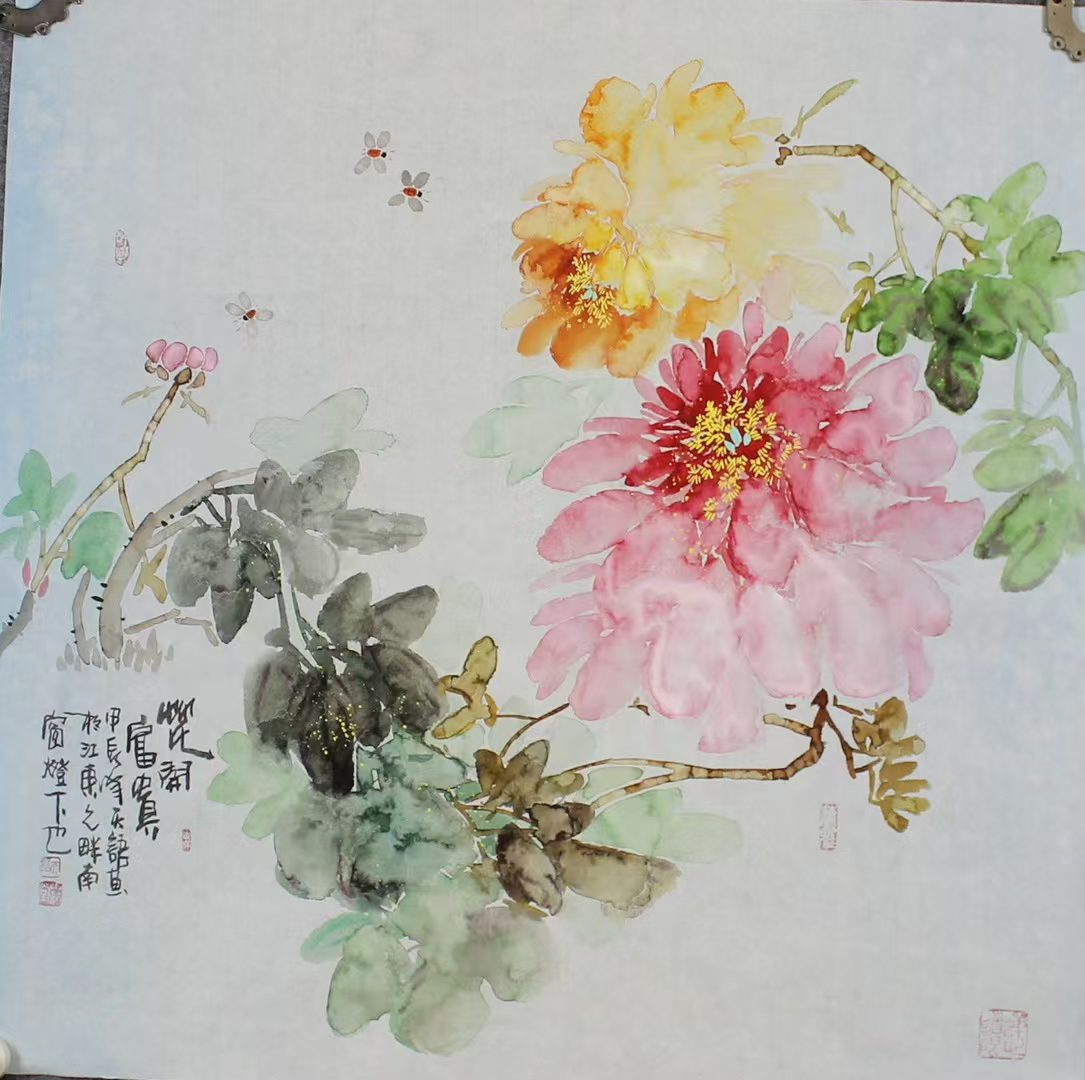
- New realm of ink and color: the peony is dyed with traditional bone-less technique, the edges of the petals are kept in ink and white, and the heart of the flower is boldly superimposed with crimson and gold foil, realizing a stunning collision of ink and heavy color.
- Narrative depth in space: the peony blossoms in the foreground like a haze, the bees and butterflies linger in the mid-ground to form an arc, and the pavilions and eaves in the far-ground are outlined in light ink, creating a three-dimensional scene that unfolds on the two-dimensional paper surface.
- The inscription is a symphony of gold and stone: on the left side, the wild cursive “Pick up the south of Jiangnan, the south of Jiangnan’s shore” dances like a dragon and snake, and on the right side, the seal script “Fu’an Chang waits for the language of the sky to be yellow” is thickly engraved in vermilion, and the words and images form a complete form of poetry, calligraphy, painting, and sealing that is unique to the literati paintings.
Detailed depiction
- Imperial Flower Language: The Golden Peony adopts the ancient method of “mud and gold dotting the stamens”, with each petal thinly dyed with 24 layers of light color, and the titanium-white spots scattered at the core of the flower are likened to the morning dew, which alludes to the meaning of the heavenly granting of riches in the inscription “Yellow in the Language of Heaven”.
- Bee Shadows: Three bees with brushstrokes hide a mystery – the front bee’s wings are as transparent as a cicada’s wing, the middle bee’s abdominal joints have identifiable hairs, and the back bee is blurred with withered brushstrokes and burnt ink, creating a rhythm of “detecting the subtle, seeing the true, and understanding the distant”.
- The hidden lines are visible in the 45-degree sidelight. The peony leaf veins are interspersed with micro-engravings of the character “Chang” in seal script, which forms a cross-temporal code with the inscription, “Waiting for the language of heaven,” demonstrating the artist’s refined interest in literati games.
Artistic Value
- A living fossil of the boneless technique: the effect of “water running” along the edge of the petals reproduces Yun Shouping’s lost technique of “injecting water to break the color” in the Qing Dynasty, with an academic value comparable to that of a museum collection.
- Integration of Jiangnan Imagery: The juxtaposition of the vigor of the “Northern Customs” seal and the elegance of the inscription “By the Side of the South of the Yangtze River” is a metaphor for the dialogue between the aesthetics of the north and south of China, which was presented as a state gift to the International Cultural Forum in 2019.
- Auspicious symbol system: nine half-open flower buds allude to the “Nine and Five”, and the number of bee colonies takes the meaning of “Three, Six, Nine” to rise step by step, which gives the work feng shui level of collection significance.
Suitable Scene
- Cultural landmark space: background wall of government hall (recommended to mount six-screen giltwood frame), century-old tea house elegant room.
- New Chinese style living space: villa entrance and Taihu stone bonsai combination landscape, or corporate chairman’s office above the mahogany table.
- Special ceremonial occasions: the main hall of the wedding (peony symbolizes beauty), the background of the birthday banquet (gold symbolizes longevity).
Purchase
- Mounting taboos: avoid the use of chemical paste, suggest the traditional “damask mounted XuanTuo” process, every five years need to re-wall taut;
- Lighting solutions: 200lux warm light oblique can strengthen the three-dimensional sense of gold leaf, but not more than 2 hours of direct sunlight per day.
- Dusting: Monthly use a soft sable brush to gently brush the image along the texture, avoid wiping with a wet cloth;
- Professional restoration: If there are creases or mold spots, you need to contact the antiquarian book restorer to use the “removing the frame and replenishing the pen” process.
Collection significance
Langyuan Fanghua, a masterpiece carrying the cultural lineage of Jiangnan and court aesthetics, is not only a visualization of the Peony Pavilion saga, but also a cultural contract that crosses time and space, waiting for the collector who understands it to continue to write a new chapter of the saga.

 Product Reviews
Product Reviews
Write A Review
Related Products